01
The cost appears between systems
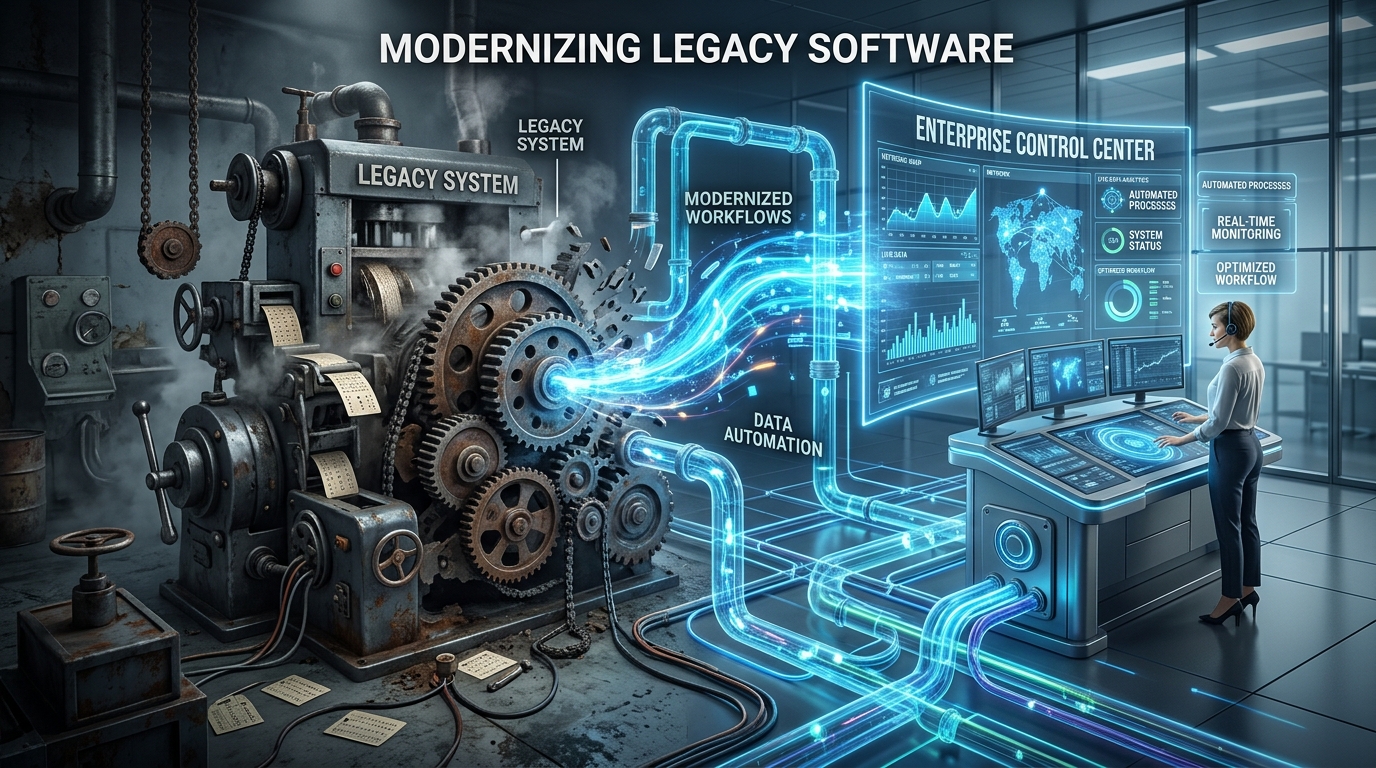
Legacy tools rarely fail all at once. Their cost appears gradually through duplicate entry, delayed reporting, unclear ownership, and work that depends on one person's memory.
These symptoms matter because they compound. Every new customer, location, or service creates more reconciliation work instead of more leverage.
02
Look for operational signals
Modernization becomes valuable when the workflow itself is constraining decisions or service quality—not simply because the technology is old.
- →Teams maintain parallel spreadsheets to trust the official system.
- →Customers wait while information moves between departments.
- →Reporting requires manual cleanup before it can guide a decision.
- →Small process changes require developer intervention or vendor workarounds.
- →Access rules are understood socially instead of enforced technically.
03
Modernize one valuable path first
A full replacement is not always the safest first move. Start with the workflow where delay, duplication, or error has the clearest business cost. Build a reliable path around it, integrate where necessary, and expand from evidence.
Written bySimpluxe Engineering
Back to insights