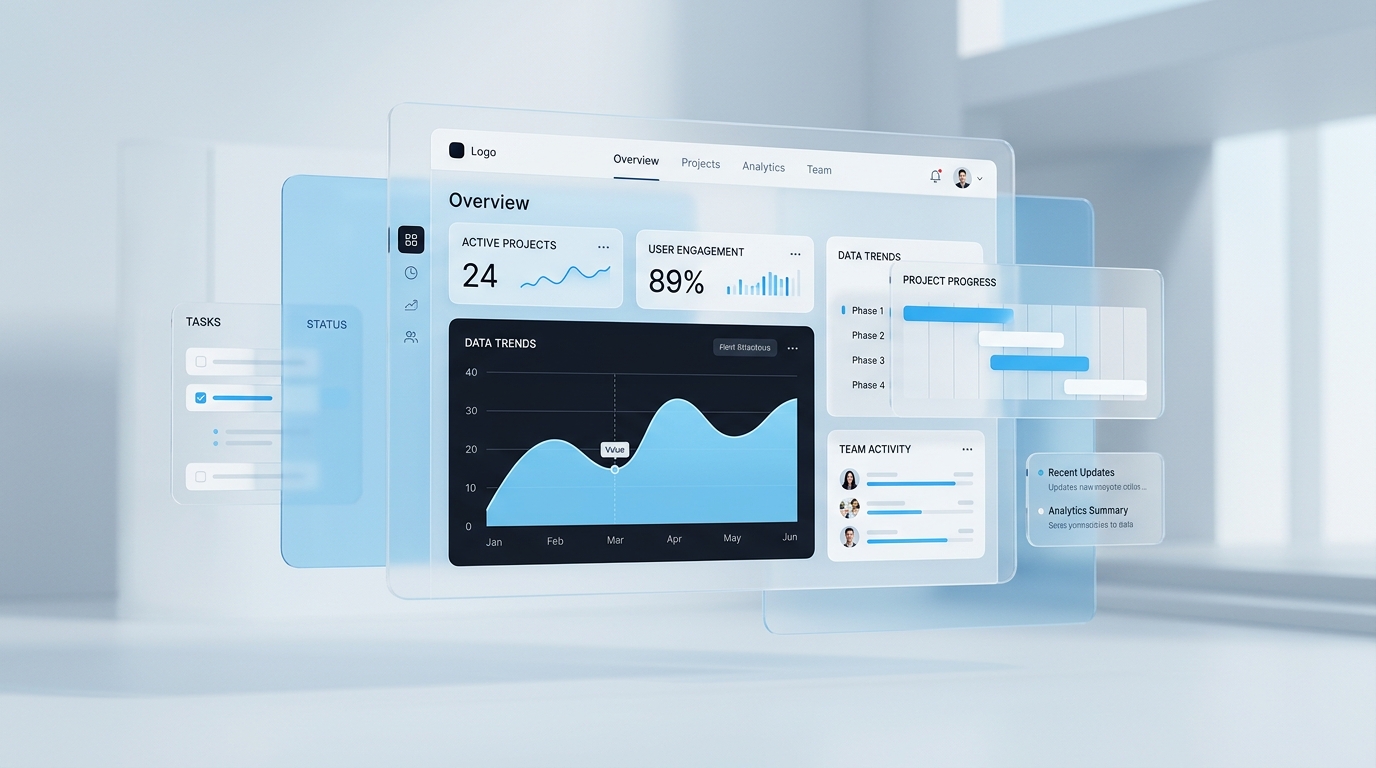

Architecture is a product decision
Architecture is often treated as a technical step that begins after requirements are complete. In practice, it shapes what the product can change quickly, what it can measure reliably, and where operational risk accumulates.
A useful architecture conversation starts with the decisions the business needs to make: who owns each workflow, which information must stay consistent, and what must remain available when another system fails.
The best early architecture is not the most elaborate. It is the one that makes ownership and change easy to understand.
Draw boundaries before choosing tools
Frameworks are implementation choices. Boundaries describe the product itself. Define the major responsibilities first, then select tools that support those responsibilities without adding unnecessary ceremony.
- →Identify the source of truth for every important record.
- →Separate customer-facing journeys from internal operating workflows.
- →Mark integrations that can fail without blocking the core experience.
Design for the next credible stage
Premature scale creates complexity that the team must carry every day. Under-planning creates rewrites at the first sign of traction. The practical middle ground is to design for the next credible stage of users, data, and team size.
That usually means a modular core, clear interfaces, observable failures, and a deployment path the current team can operate confidently.